
One platform, set up the way you sell.
One platform — email, SMS and WhatsApp from a single inbox — pointed at the job your kind of business actually does. Pick the one that reads like you.
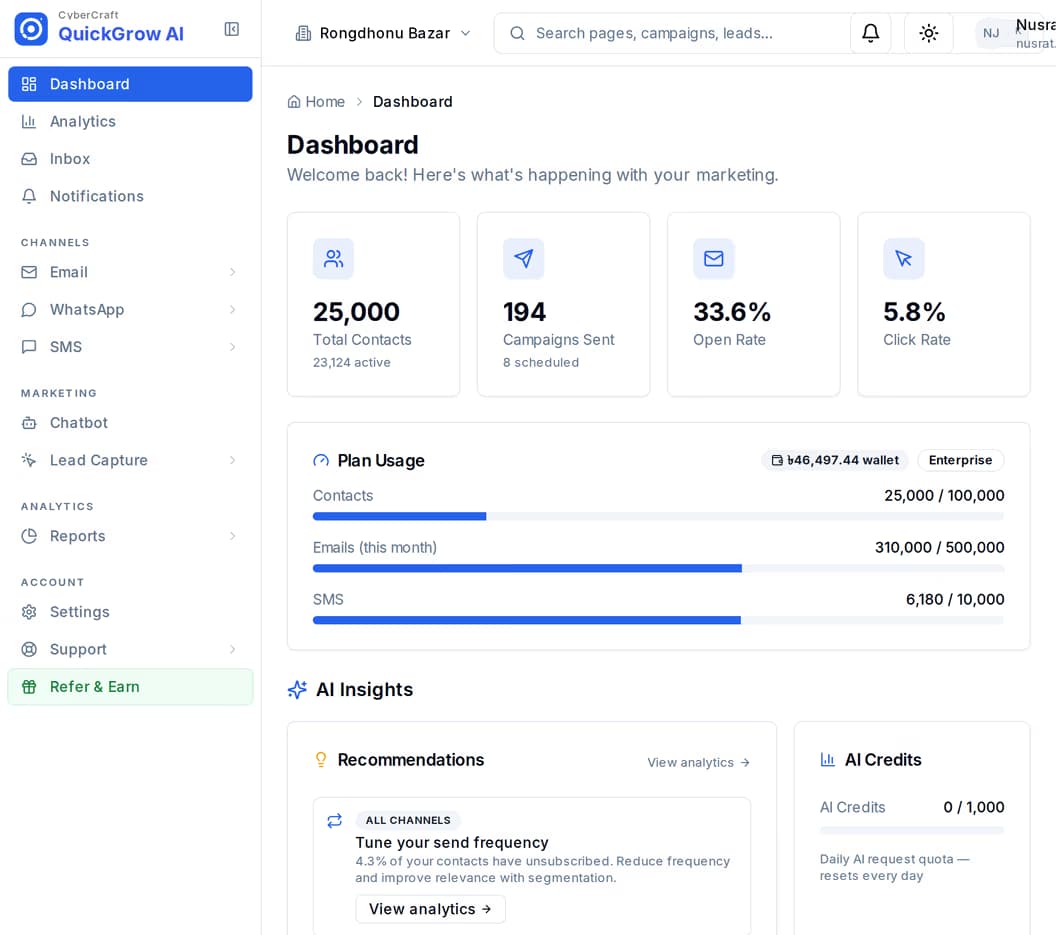
Every industry below is the same product.
An industry page does not unlock different software. It changes which channel leads, which messages you set up first, and what the automations are pointed at. Underneath, every account gets all of this.
Three channels, one inbox
- Email campaigns sent through your own setup, or through ours
- SMS with a branded sender name once your sender ID is approved — until then it goes out from the default sender
- WhatsApp on the official Meta connection, from your own business number
Work that runs without you
- Journeys off any date you keep on a contact — appointment, delivery, renewal, fee due, birthday
- Steps that send, wait, branch, tag, untag, update a field or call your own system
- Journeys off a form submission, or off someone opening or clicking a campaign
Kept apart, kept in check
- Each brand, branch or client is its own account — separate contacts, templates, users and reporting
- Quiet hours held on SMS and WhatsApp: nothing reaches a contact between 21:00 and 08:00
- Per-contact send caps and a cooldown on every channel, applied by the platform rather than left to you
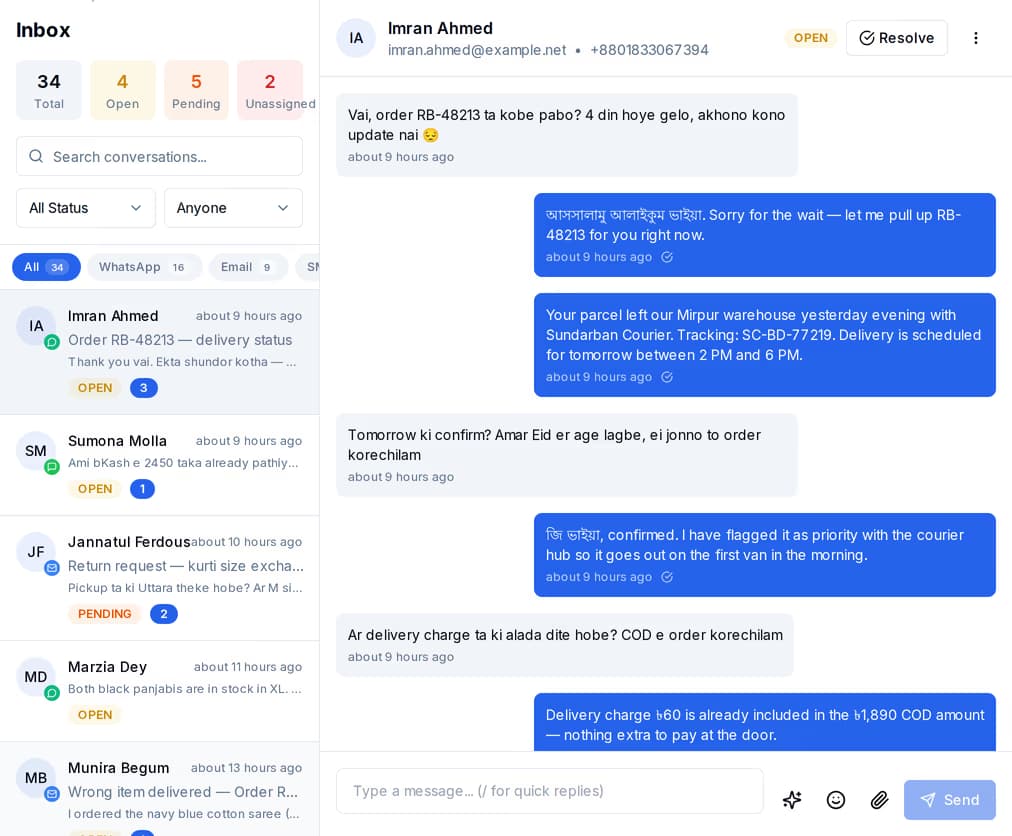
Your customer picks the channel. You open one screen.
A clinic gets questions on WhatsApp. A courier gets them as SMS replies. A school gets them by email. All of it arrives in the same place, against the same contact, so nobody is forwarding screenshots to a colleague to find out what was already said.
- Email, SMS and WhatsApp threads for one person, in one history
- Hand a conversation to the colleague who should be answering it
- Let the chatbot take the first reply and pass the hard ones to a person
Three rhythms. 13 starting points.
The groups below are not three products. They are three rhythms of business, and most people recognise their rhythm faster than their industry label — so start there, then open whichever of the 13 pages sits closest.
The message follows a sale.
Somebody buys, and there is a run of messages owed after it — confirmed, on its way, thank you, come back next month. Your list grows at the till or the checkout, and the way you group people for an offer is with tags you put on them yourself.
The message follows a date.
An appointment, a class, a viewing, a delivery slot, a fee due at month end. Keep the date on the contact and the reminder goes out on its own — a set number of days before or after it, without anyone remembering to press send.
It has to arrive, and you have to be able to show it did.
A login code, a payment alert, a field-team briefing, a client account that must never see another client’s contacts. What matters here is delivery you can check message by message, cost you can reconcile afterwards, and accounts kept properly apart.
None of them is quite you?
That is common, and it is not a problem — the industry pages are worked examples, not licences. There are two other ways in.
Before you pick one.
What if my industry is not on the list?
You can still use QuickGrow. The industry pages are worked examples of how a business of that shape tends to set things up — they are not separate products, and nothing in your account is tied to one of them. If none fits, browse the use-cases pages instead, which sort the same platform by the job you are trying to do, or tell us what you send on the contact page and we will point you at the right starting setup.
Can I use more than one?
Yes. Read as many as apply — a hotel is part travel and part hospitality, a diagnostic chain is healthcare with a retail counter. Your account is not configured by which page you arrived from. If you run genuinely separate brands or branches, keep them as separate accounts instead: contacts, templates, users and reporting stay apart, which is what you want when the customer lists are not the same people.
How long does setup take?
Email you can start the same day, using your own sending setup or ours. SMS you can start straight away on the default sender; a branded sender name of up to eleven letters or digits is an application that has to be approved, and until it is approved your messages go out from the default sender. WhatsApp needs your business number verified on the official Meta connection. The waiting on those two is approval time rather than build time — the work inside the platform is an afternoon.
Start with the page that sounds like your business.
Or skip the reading and open an account — every industry above runs on the same three channels, the same shared inbox and the same automations.